
Building as the world changes
Between the nineteenth and twentieth centuries, the Barcelona in which Gaudí works is shaped by the energies and contradictions of industrialisation. New materials and production systems expand architectural possibilities. They also change the rhythm of life and the distance between the work of hands and the result people inhabit every day.
I do not read Gaudí as someone who rejects every innovation. That would be a simplification. I am interested in how observation, geometry, models and experimentation become tools for retaining a human measure in building. Technology enters his research; the question is what relationship it allows us to create between people and the world.
Human beings are nature. They can invent, transform and build; but they cannot erase this bond without losing something of themselves.
Nature as teacher
A tree offers much more than a silhouette to reproduce. It shows how a body grows, distributes weight, seeks light and finds equilibrium within its environment. A rock bears traces of material and time. The sea suggests continuity, movement and variation. Looking at these realities means seeking relationships, not merely collecting images.
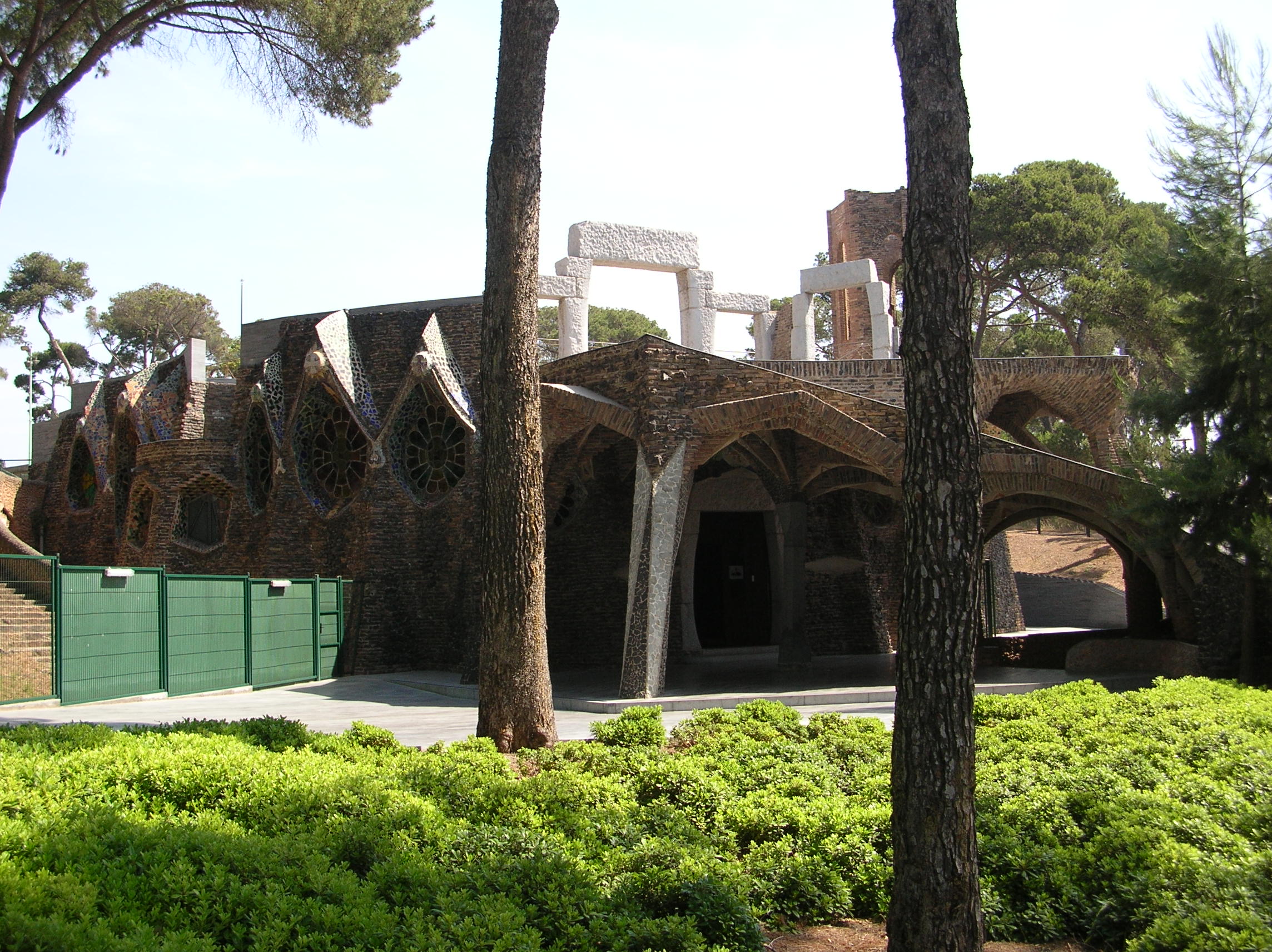
At Colònia Güell this encounter involves both structures and landscape. At Park Güell stone and inclined spaces change the experience of walking. In the façades and interiors of Casa Batlló and Casa Milà I recognise other possibilities within that dialogue. The works are different: I do not want to reduce them to a single formula. Yet they share the capacity to make us feel material as something alive.
Rediscovering the body in space
My reading also concerns the person who enters these places. The body is not an outside spectator: it walks, finds its bearings, encounters shadow and light, senses the weight of surfaces and changing distances. Architecture can remind it of its belonging to the natural world through concrete experience, even before explanation.
This is how I interpret Gaudí’s response to the risk of dehumanisation. I do not attribute to him a manifesto he did not write. I read his works as attempts to restore a relationship: eyes, hands, labour and material participate in a space where people can recognise themselves. Wonder begins when that bond becomes perceptible again.
Returning to origins, looking ahead
The idea of returning to origins has accompanied me for years. For me it is not an invitation to rebuild an ideal past. It asks us to return to the fundamental conditions of our existence: body, gravity, light, material, our dependence on the life around us. From those conditions we can begin inventing again, using tools that Gaudí could not have known too.
This is also where the thread connecting Gaudí and Vitruvius in my research begins. Almost two thousand years and profoundly different contexts separate them. I do not seek to erase that distance. I seek a question capable of crossing it: how can we transform the environment while retaining a measure of our humanity? Nature becomes the ground on which I question them both again.
The legacy of a question
When I look at the completion of the Sagrada Família, I keep asking whether resemblance to a forest is enough to preserve this research. Judgement requires attention to materials, documents and construction phases. Yet a cultural question remains too: does continuing an author’s imagery necessarily mean continuing their thought?
For me, Gaudí’s strength lies in making this question inhabitable. His architecture offers places where we can think through body, light and stone. It does not give us a final answer about the human place in nature. It invites us to seek one without forgetting where we come from and to which world we belong.