


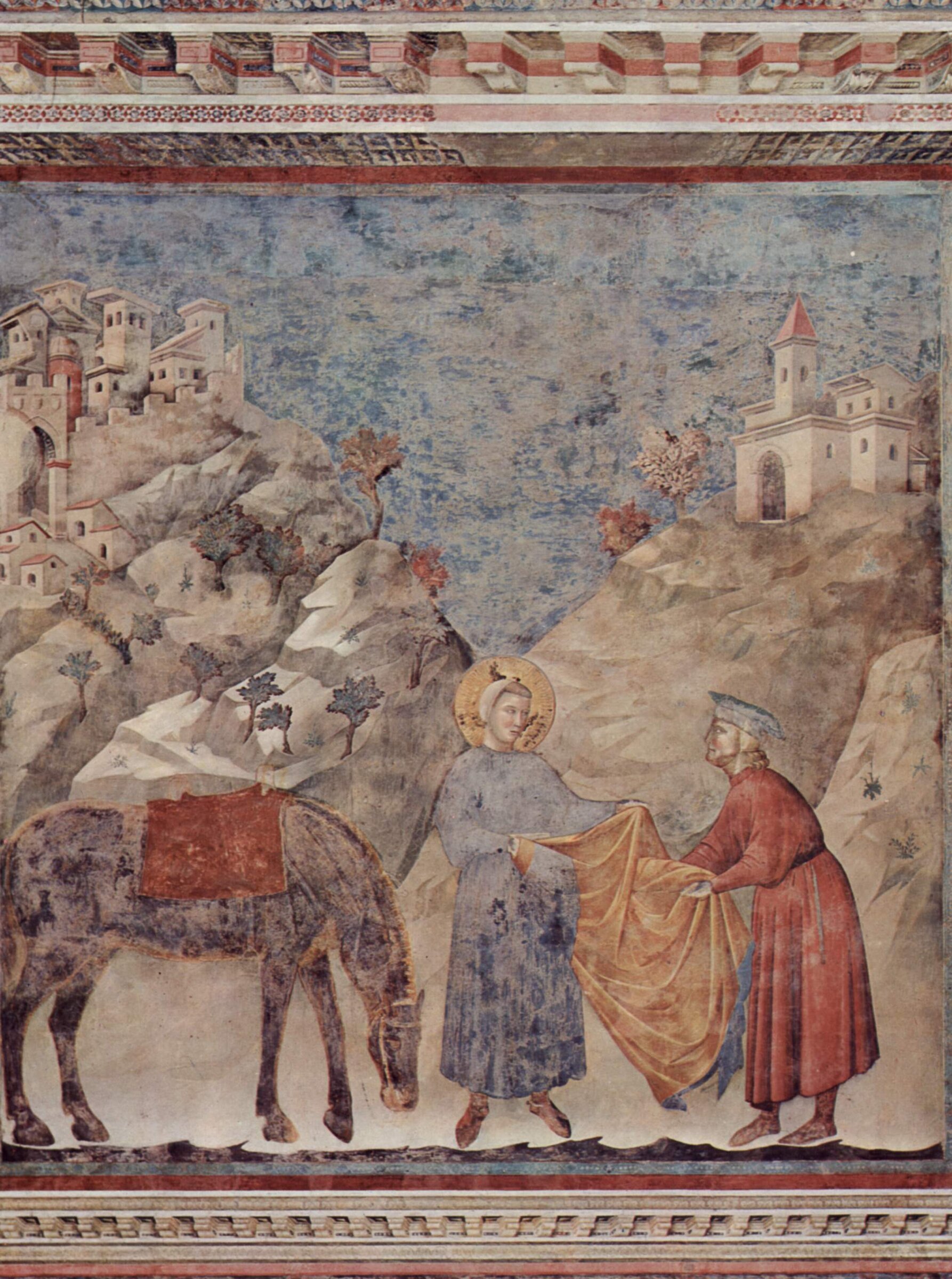
I found these questions again in the connection between Francis of Assisi and Antoni Gaudí explored by Chiara Curti and Father Giuseppe Buffon at an event promoted by the Italian Embassy in Madrid. Their conversation centred on creation, the Nativity scene and the renunciation of possessions. Three themes that invite us to consider works and lives together, the beauty of the world and the way we choose to inhabit it.
One point fascinates me above all: looking closely at nature can teach us to recognise the value of what seems small. For Francis, this gaze embraces every creature and becomes fellowship with the excluded. For Gaudí, it takes shape in architecture, but also emerges in his everyday care for the people working alongside him.
Francis calls the sun his brother and water his sister. In the Canticle, the world is a family to which we belong. To understand how demanding this idea is, however, we need to return to an encounter less reassuring than one with a flower or a tree.
In his Testament, Francis remembers the lepers. He describes how difficult it was for him to see them, and the change that came when he began to live among them and show them mercy. What had seemed bitter became sweet. Even before singing of the kinship of all creatures, he had learned to recognise a brother in the person he would once have wanted to avoid.
Here his closeness to the poor takes on its full force. Francis shares their condition and allows that encounter to change his own life. His poverty makes possible a closeness that social divisions obstruct. Calling someone a brother also means accepting that we need him.

Gaudí lives many centuries later, in a Barcelona transformed by industrialisation. Factories and urban growth generate wealth, but deepen social divisions: alongside the prosperity of the bourgeoisie are the toil of workers, insecurity and often extremely harsh living conditions. Gaudí knows both worlds. He works for wealthy and powerful patrons, while on his building sites he meets people who depend on their labour every day. It is within this contradiction that I want to look at him.
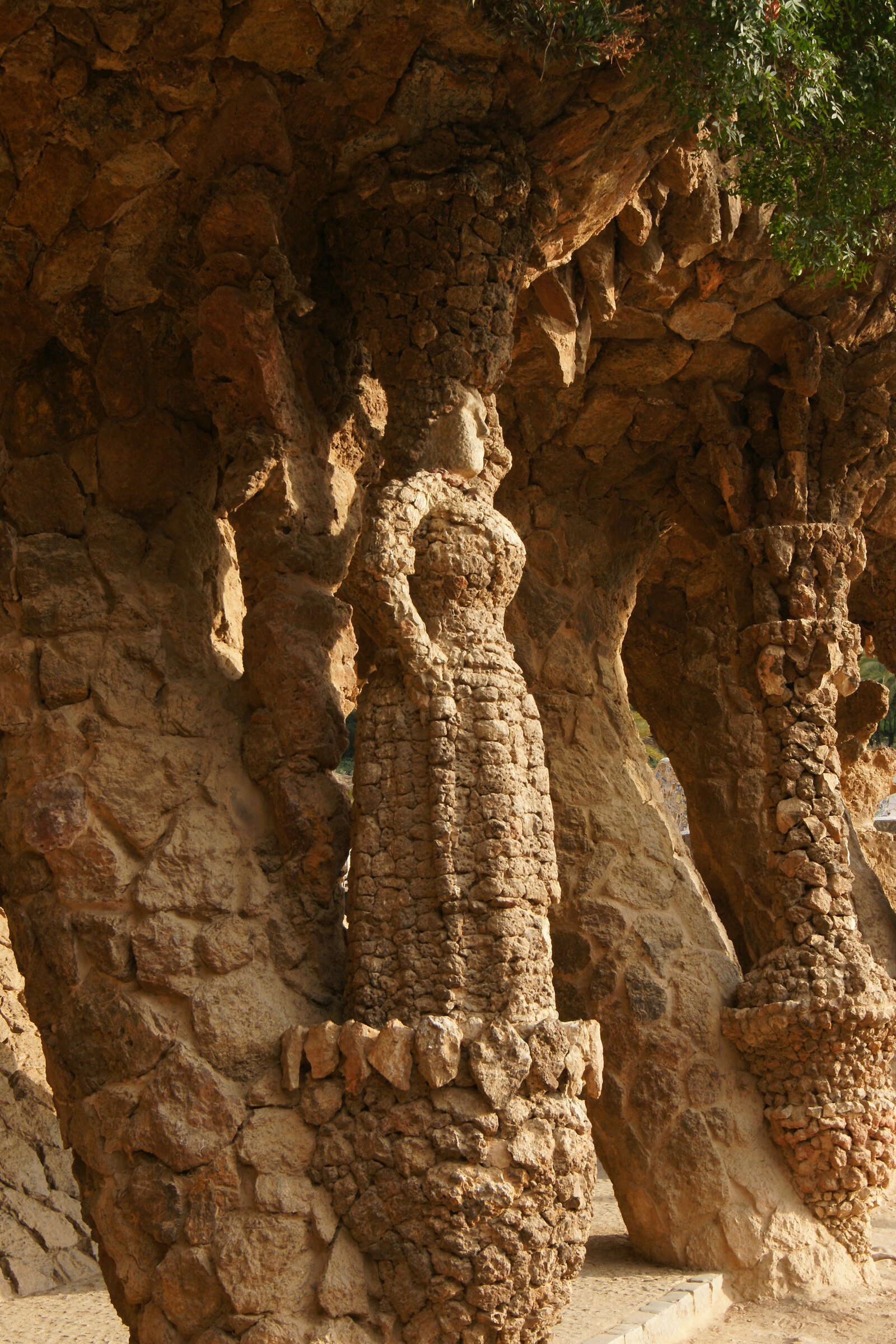
One figure makes this encounter visible more clearly than many words could: the washerwoman of Park Güell. In the rough stone portico, one of the columns takes the form of a woman carrying the load of her trade on her head. Gaudí takes up the theme of the caryatid, the female figure that replaces a support in classical architecture, and brings it closer to the life of his own city. Here it is embodied by a working woman.
The washerwoman belonged to a world of work that was among the humblest and least recognised. In Catalonia at the time, many working-class women earned their living by washing other people's linen, including that of wealthy families. It meant hands immersed in water, clothes to scrub and loads to carry. Work essential to everyday life, yet easily overlooked by those who benefited from it.
In Park Güell, that woman enters architecture in the role of a caryatid. Her figure gives a human face to the support, making the weight and the strength needed to bear it visible. I read this as a profound gesture of recognition: the woman most easily ignored becomes an essential presence in the building. Humble work acquires monumental dignity. The toil of those who sustain the lives of others finds a form in stone that we can finally see.

This is the way of thinking in Gaudí that interests me: thought taking shape through making. His choices emerge through materials, the organisation of the building site and the spaces offered to people. We can look for his response to the wounds of the industrial city in these concrete aspects of his buildings. A washerwoman becomes a caryatid; a child finds a school; an elderly worker keeps a place in the working community.
Beside the Sagrada Família building site, in 1909, Gaudí designs a school for the workers’ children and the children of the neighbourhood. A small building, making ingenious use of materials, to which he devotes his inventive skills. This thought strikes me: while imagining an immense church, he finds the time and space for a place where a child will learn to read.
The accounts collected in the volume Il mio Gaudí also help us see the human side of the building site. Llorenç Matamala, the sculptor who worked with him, was a friend for many years; his son Joan met Gaudí while still a boy, working alongside his father. The knowledge held in skilled hands had a face and a history. As the son of a coppersmith, Gaudí knew that world well.
The Sagrada Família Foundation also recalls a less familiar habit. Gaudí gives elderly workers lighter tasks so that they can continue working. It is a practical expression of care for frailty and the body's fatigue. On the building site, a person still has a place even when their strength begins to fade.
Chiara Curti also describes the time Gaudí devoted to children, including those from charitable homes, taking them around the church. We can imagine him stopping, explaining and looking for words they could understand. An architect capable of imagining extraordinarily complex forms feels the need to share them with those who are only beginning to discover the world.
These gestures give substance to the comparison with Francis. Fellowship is measured in closeness to people, in time shared and in recognising their worth. With Gaudí, architecture too becomes part of this care: beauty concerns those who work, those who learn and those who struggle to find their place.
I think of the crypt at Colònia Güell, conceived as the church of a workers’ community. For me, this place holds a very particular memory. It was the spring of 1989 and I was beginning my thesis on Gaudí. When I arrived in Santa Coloma de Cervelló, someone suggested that I walk through the woods to reach the church. I was walking among the trees, looking for the building, unable to make it out.
Then I realised it was right in front of me. The stone, the bricks and the leaning columns seemed to continue the landscape I had just walked through. It was an encounter that changed my understanding of Gaudí. Even today, when I think back to it, I feel that his architecture begins with that willingness to observe, to let a tree teach us something.
In the crypt, the rough surface of the columns and the light filtering through the stained glass bring matter close to contemplation. The stone retains its weight and its roughness. The forms seem to grow around those who enter. And knowing that this space was intended for the colony's workers makes the experience more intense: extraordinary architectural exploration meets the everyday life of a community.
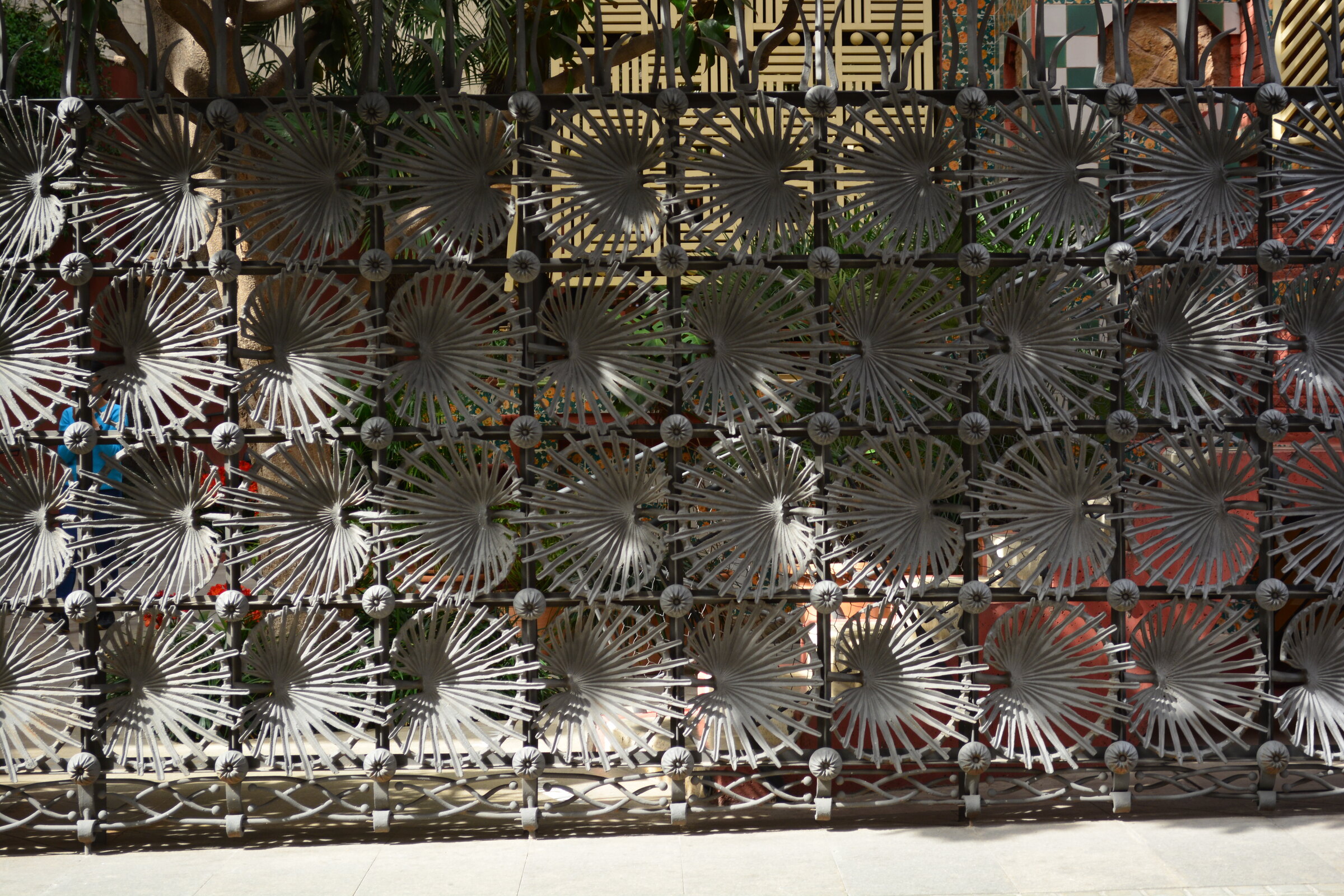
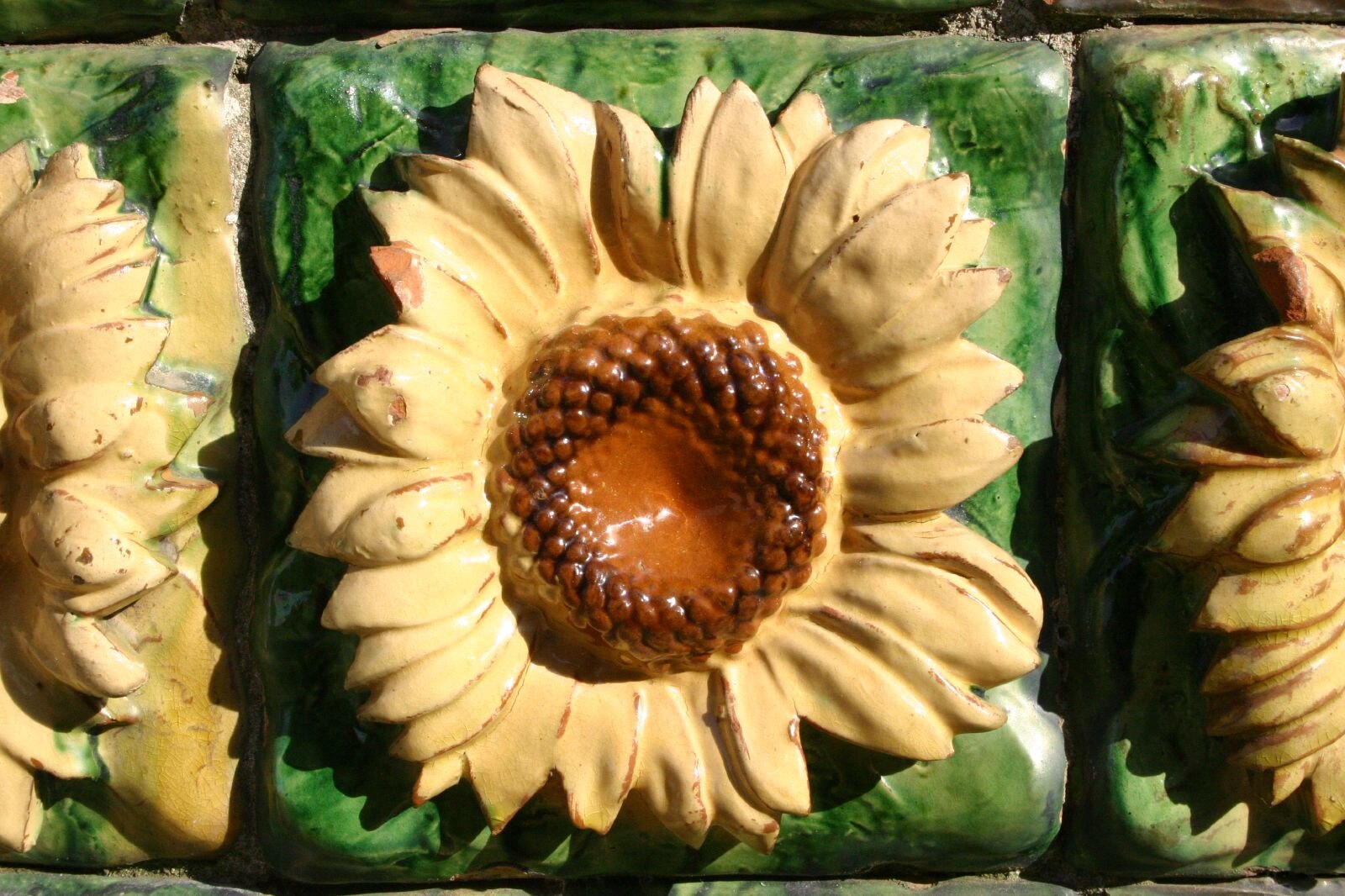
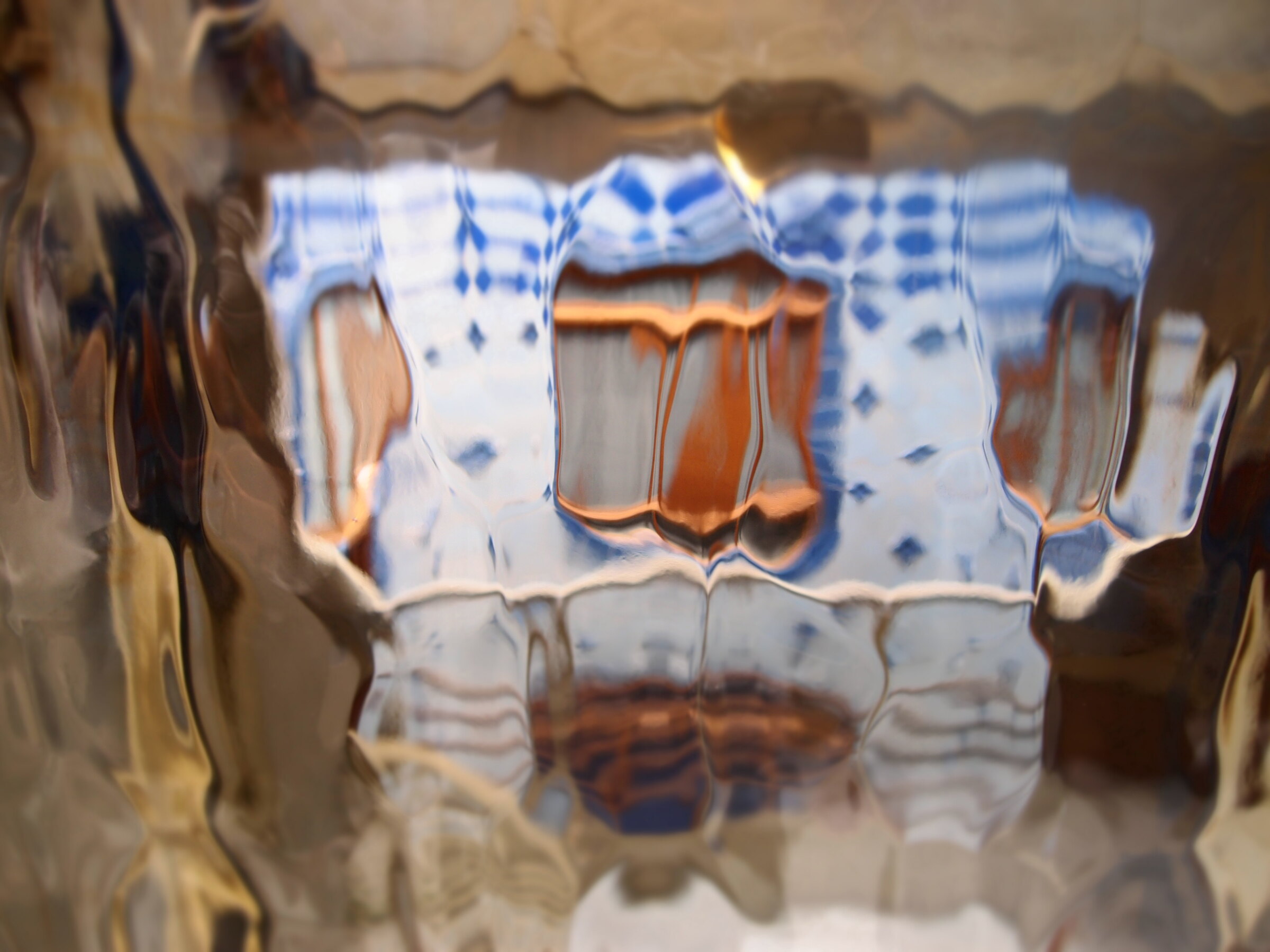
At Casa Vicens, a palm leaf is enough to inspire the design of a fence. At El Capricho, a sunflower takes shape in ceramics. At Casa Batlló, the glass ripples the view of the courtyard like a surface of water. It is a gaze that draws close to things, follows their veins and captures their movement. And, within a house, it gives us back the wonder of an encounter with nature.


Francis and Gaudí thus help us rediscover attentiveness to what lies before us. Flowing water and a branch bearing its own weight can become occasions for gratitude and understanding. For Francis, creatures join in praise; for Gaudí, observing them also means learning how to build. For both, faith passes through the tangible experience of the world.
The Nativity scene makes this encounter still more evocative. At Greccio, at Christmas in 1223, Francis wants people to sense the poverty of Jesus’ birth. The manger, the hay, the animals and the people gathered around the celebration bring the Gospel story closer to everyone's life. At the heart of the Gospel story is a child who needs to be welcomed.
On the Nativity façade of the Sagrada Família, Gaudí gives Christ's birth a visible presence amid the abundance of life. Human figures coexist with plants and animals; the stone welcomes a multitude of creatures. I like to read this façade as a great Nativity scene in which the whole world draws close to a birth. This interpretation brings two sensibilities into conversation, without claiming to prove a direct influence.
There remains the renunciation of possessions, perhaps the most difficult theme to approach. For Francis, it means giving up ownership and the security it provides. In Curti's interpretation, Gaudí's decision to devote himself entirely to the church can also be read as a gradual commitment to service. His inventiveness is inexhaustible, but the work calls for other hands, other kinds of knowledge and a span of time beyond a single life.
This is where I feel Francis and Gaudí meet: in the possibility of recognising something immense without feeling that we own what we love. One sings of creation. The other listens to its forms and turns them into space.
Perhaps we can begin with a very simple gesture. Stop before a stone, a flower or a tree. Then give that same attention to a person whom haste would otherwise have made us overlook. Creation as prayer begins here too: with the ability to notice those who live beside us.